Friday, November 29, 2019

Finish it Friday ~ Purple Table

We received a set of hand-me-down end tables several years ago. The previous owners had given them an antiqued finish in a color best described as Forest Service Outhouse Brown—not exactly my style. Nevertheless, they have traveled around our house, taking on various roles here and there. One of the smaller tables is serving as the piano bench right now; the other two have been doing duty as junk-collection surfaces in the basement for some time.

I decided to fix the taller, longer of the tables up and give it new life as a plant stand in our sunroom. I would have liked to use chalk paint, which people have told me requires no sanding before use, but instead I used the leftover paint from E and Z's bedroom, which, despite being latex wall paint (my dad always gives me a hard time for using latex paint on wood), had two distinct advantages over chalk paint: I didn't have to go anywhere to get it and it didn't cost me anything. But I did have to sand all the old brown paint off the table first.


C documented the process (ignore the weird sun/shadows that makes it look like I have a beard and/or a missing tooth). Then the painting began. I used to think it would be fun to buy old furniture and fix it up to sell. It was a little fun painting this table, but not fun enough for me to want to do it full time. Also, that would require being careful about drips and lumps and brush lines.

Still, it turned out pretty great, and it fits the space perfectly. I put some cork feet on a few leftover floor tiles (to keep water from getting trapped underneath) and placed them on top to help protect my paint job from leaky flower pots. I'm pretty happy with the result, so much so that I think I'll repaint one of the other tables as well. Now this room just needs a comfy place to sit (the futon that used to live in here migrated to the living room when our family got too big to fit on one couch).

Monday, November 25, 2019

Mindfulness Monday ~ Favorite Moments

I know this is the week when we (we Americans anyway) are meant to express our thankfulness for the various blessings and bounties we enjoy*. And I know that keeping a gratitude journal or other record of the things we're thankful for is supposed to be good for mental health. I also know that I've mentioned on this blog more than once my superstitions about not only saying but writing down the things I'm grateful for being an invitation for all the little demons to come and snatch those very things from my grasp. So I don't do it. I can't.

But I can write about the good things that happened on a particular day; because those events are in the past, no gremils can take them away. My sister-in-law gave me this little "favorite moment a day" journal for Christmas last year (or the year before??), and I'm sorry to say I've been very lax in using it. But I've just started to put it into practice and intend to keep it going, even (especially) once I return to work.

Right now my days are pretty good (mostly because I rarely have to deal with people, other than my husband and kids, and it strikes me that difficult people are the prime ingredients in bad days). So the journal is almost superfluous—every moment is a contender for favorite. I'm going to have to work a lot harder to have good days when I'm selling 10 hours of them to other people. Laura Vanderkam writes in Off the Clock that doing things that stand out in our memory is a good way to make time feel less fleeting. It stands to reason that a practice of writing down the good things that happen each day is a good way to manifest good things happening. I'll let you know how it works out.

Friday, November 22, 2019

Finish it Friday ~ New Noro Hat

Ten years ago, I knitted myself a Noro Spiral One-Skein Hat. Up to that point, I had been knitting for more than a dozen years, but had averaged only one project per year. That hat was the turning point, when I realied I needed to either knit or get off the pot. It was also the first project for which I remembered how to cast on without help and where I learned about stitch markers and yarn-overs. It was also a really great hat—all my favorite colors, and it fit really well, and I always got compliments on it wherever I went.

Then sometime between last hat season and this, it disappeared. I don't remember seeing it when I cleaned the mudroom over the summer (I don't remember not seeing it, either), and since then I've cleaned the entire house, top to almost bottom, so unless it's lurking in the basement somewhere, it's gone. I suspect that it got jealous of this hat, with which it had to share my head last winter, and went off to find a new home. It should have known I always have room on my head, and in my heart, for another hat.

When it became clear the hat wasn't coming back, I picked up a skein of yarn and made a new one.


I normally wouldn't choose such dark, or such neutral, colors, but I had a hankering for an autumnal-hued head-warmer, in part to go with my bright orange fall jacket, and this skein of yarn called out to me the moment I walked into the yarn store—I liked the sunset/night sky/autumn leaves feel of it. This hat knit up a lot faster than the last one, with ten more years' knitting experience (at an average of six projects per year, I'm happy to report) under my belt. I don't love it quite as much as I loved the lost one, and I wish I'd started the decreases two rounds earlier, but it's a pretty good hat, and I think it will grow on me.

Ravelry notes, such as they are, are here.

Thursday, November 21, 2019

November Survival Guide


A wind and rainstorm whipped through Maine on Halloween night, ushering in the bare and bleak landscape of November. The next couple of weeks brought periods of unseasonably cold temperatures (which I read as "unreasonably cold" temperatures, an accurate description in my opinion). Meanwhile the month chugged on, moving with slow but steady persistence toward my return to work and the holidays, when my children's wants ratchet up to an intensity that's inversely proportional to my ability to meet them, even if I were inclined to indulge their consumerist tendencies.

November vies with March in my world for being the most challenging month to get through, the one I'd most like to escape from into a stone hut perched in the midst of a nice warm, dry, sunny desert. So this year I've taken steps to try to keep from getting sucked into the November gloom. They include:

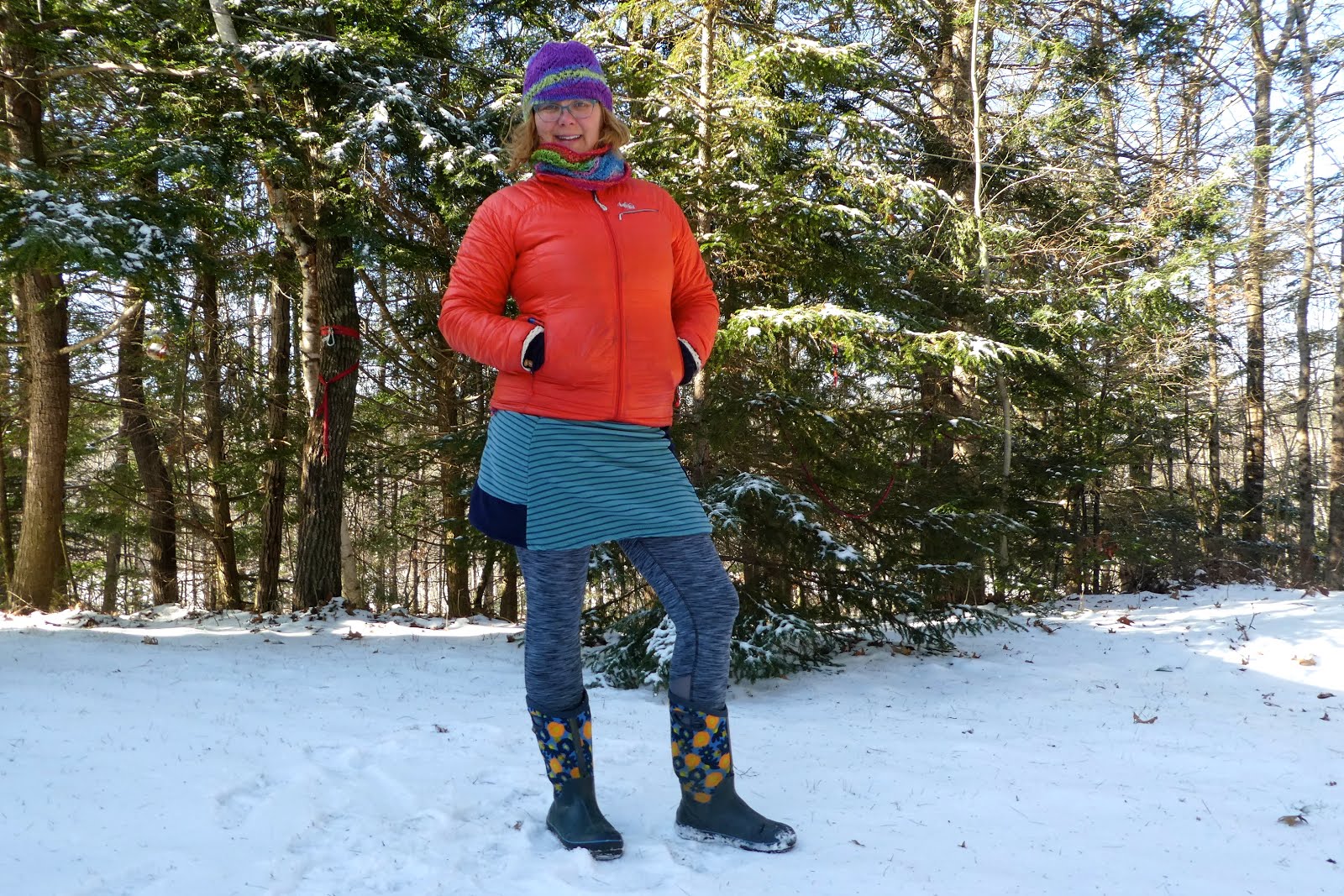
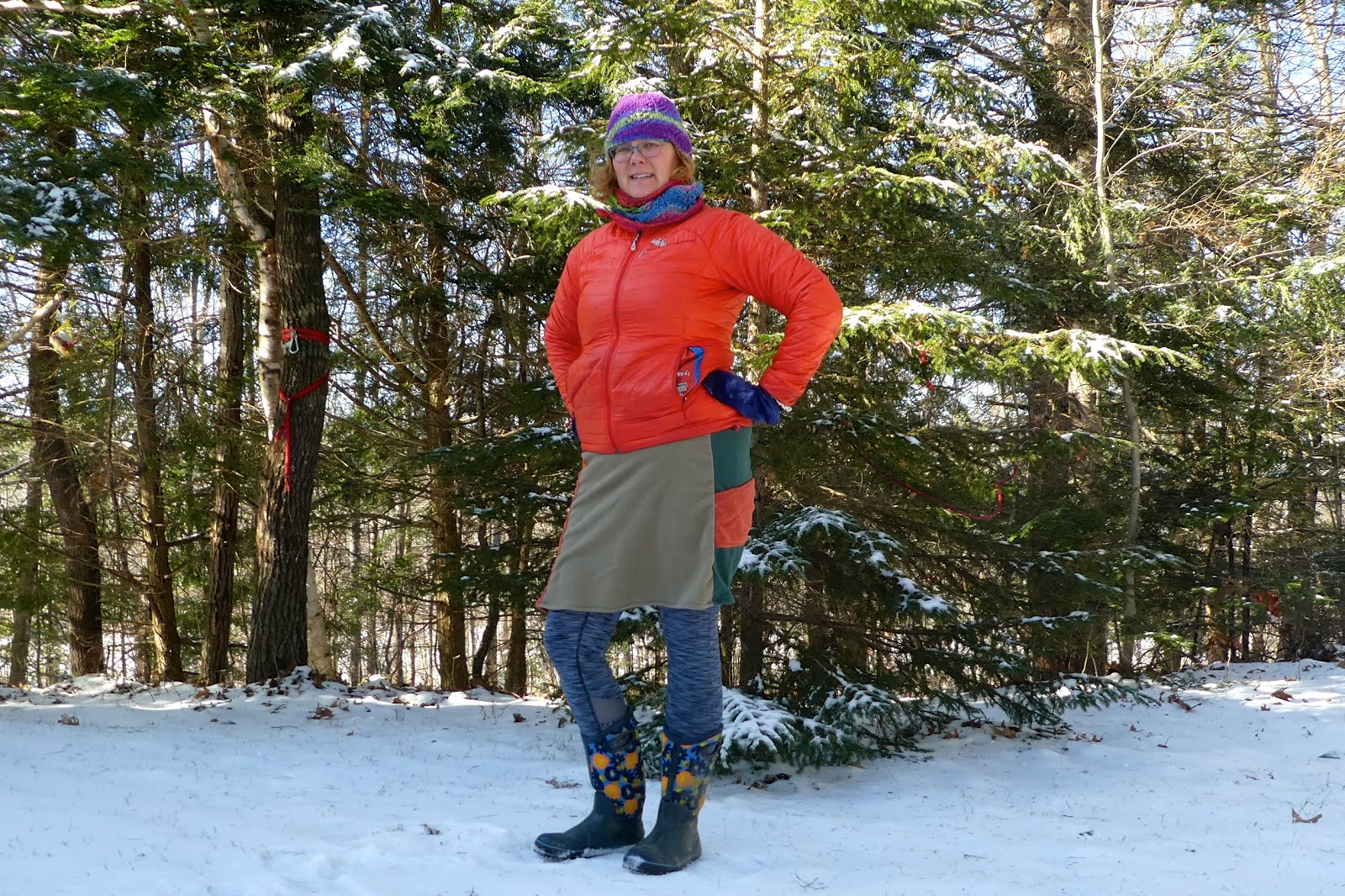
  • Walking daily, whatever the weather (and making a set of cute fleece skirts to wear on those walks).
  • Making stuff. I used to think I needed to "accomplish" things to stay reasonably content, but really what I think I need is to make things, with my hands, that don't need to be remade again the next day. In addition to the skirts mentioned above, I've got two fun knitting projects going (which I never do; I'm usually a very monogamous knitter).
  • Writing. I've been doing my own version of NANOWRIMO, mining journals for material and typing in at least 1700 words per day (and feeling validated for doing so by Lydia Davis).
  • Managing my time. I've been trying to implement some time management techniques that are supposed to make you feel like you have more time. Jury's still out on whether or not they work.
  • Spending time with friends. I've gone on a couple of lunch dates, gotten together with friends to knit, and had a "Girls' Day Out" with a mother-in-law. I've also gotten together with fellow Maine Master Naturalists for events, gatherings, and meetings.
  • Making art. I've been trying to devote at least a little time each week to nature journaling and/or watercolor painting.
All this does not change the fact that the days are about seventeen minutes long, and it's unreasonably cold, and the holidays and the job are bearing down like a runaway freight train. But, along with a few deep breaths and some mindless couch and TV time, it's making this month a lot easier to take.

This post went out last week to subscribers of my newsletter, along with some bonus material. You can subscribe here.

Tuesday, November 19, 2019

A Dangerous New World


I'm very honored to have had my essay, "'Persistence' Is the Thing with Fins," selected to be included in the forthcoming anthology, A Dangerous New World: Maine Voices on the Climate Crisis, which will be published next month by Littoral Books. It was a difficult piece for me to write because my default reaction to all talk of climate change is denial—not the "let's make as much money off of fossil fuels while creating a massive smoke screen—both literally and figuratively—and pretend everything is fine while the earth as we know it melts down" Exxon-Mobil-style denial, but the "oh my god we're all going to die will my children even have a future there's a nice sand hole to stick my head into" ostrich-style denial. But I'm glad I powered through and wrote it, and I'm glad I focused on someone making a real, positive difference in the world for my piece.

If you're intrigued, there will be a book launch party on December 8th at Space Gallery in Portland. I'd love to see you there!

Friday, November 15, 2019

Finish it Friday ~ Fleece Skirts

This month I've been going for a 40-minute walk first thing each morning, to stay active as we slip into the season during which I just want to burrow into the couch with a stack of books, a bottomless chai, and a basket of yarn and hibernate. To ensure that my brain swithces into "exercise" mode and not "wander slowly looking at birds and trees" mode, I dress the part: leggings of some sort of sporty material, sneakers, and a shirt beneath my layers of jackets that is designated an exercise shirt. This uniform worked pretty well, comfort-wise, until last week, when the weather got a little chillier and I found myself wishing for just a little more warmth around the middle and decided I should make myself a fleece skirt.

I have a large bin of fleece, much of it purchased at the Malden Mills (inventor of Polartec) factory store in Massachusetts many years ago, before I had kids and before they (Malden Mills, not my kids) went bankrupt. When I opened the bin up I was so excited by the selection I couldn't stop at one skirt and instead made three.

I started with the purple one, for which I used this pattern. It was very easy to follow, though I will say I didn't do quite as neat a job as she did (I'll blame my lack of serger). I also tried an experiment of using fold-over elastic as sew-down elastic in the waistband, but it didn't quite work out and the waist is a little loose.


For the next one, I used my very favorite blue-and-blue striped fleece, which I made into these pants for E and Z when they were three. Man, they wore those things till they were at least six. They're probably the reason E will only wear soft fabrics and elastic waistbands to this day. I also made E and Z beanies out of the same fabric for the Colorado Trail. I'd already gotten a lot of mileage out of that little remnant of fabric (two, three yards, maybe), and there wasn't quite enough left for a whole skirt, so I copied the four-panel skirt design from this picture, with a stripey pocket on one side, and I must say it's quite jaunty.


Finally, I wanted to try a yoga waistband style, and used a skirt I already own as a guide in making that pattern. I used scraps of four different fabrics—black, tan, green, and melon (or coral?), all of which were too small for a whole skirt. After some seam-ripping caused because I doubted my original pattern calculations and added an extra inch to the black panel, it all came together just fine, super cute, and maybe a mite snug.

Of course, the day after I made the skirts, it snowed, then the temperature dropped and the wind picked up. I powered through with the leggings-and-skirt combo and switched my walk to the afternoon on the two days the temps were in the teens, but it was not quite warm enough with the wind blowing.  I’m either going to have to make a longer skirt for really cold  days or switch to snow pants.

Thursday, November 14, 2019

November 2019 Nightstand ~ British Nature Writing

This month's reading selections reflect a small obsession with British nature writer Robert Macfarlane. It started with me running across a video of Macfarlane giving a talk. That reminded me how much I'd enjoyed reading Mountains of the Mind a few years ago, that I had checked Landmarks out from the library when it first came out but quickly decided I wanted my own copy and returned it unread (and never got around to buying it), and that I had a copy of The Wild Places, which a friend had given me and which I'd been keeping in my car for emergencies of the "a long wait and nothing to read" type. Fortunately or unfortunately, I hadn't had a lot of that type of emergency and had only gotten partway through the book. So I brought it inside and added it to the nightstand and bought myself a copy of Landmarks.

The Wild Places is an account of Macfarlane's quest to explore the last remaining bits of wilderness in the Britain, and along the way redefining what "wild" means in the context of islands that have been inhabited by and transformed by humans for thousands of years. Landmarks is a lovely meditation on a number of nature writers, most of them British, although John Muir is included (perhaps, since he was born in Scotland, he counts as British), and all of them, I gather, having had some significant impact on Macfarlane. Interspersed with the stories of the writers are collections of words from various languages, dialects, and regions of the British Isles for natural features and phenomena, with the idea that losing the language of nature goes hand-in-hand with losing nature itself, and inversely, reclaiming the words is a step toward reclaiming the landscape.

While looking for Landmarks in a little bookstore one day, I came across a slim book with green and purple mountains edged in gilt on the cover. Macfarlane's name was on the cover as well, his introduction to the book coming from his chapter in Landmarks. The book itself, The Living Mountain, was written by Nan Shepherd in the 1940s, and is a life history of the Cairngorm Mountains in Scotland, told by a frequent visitor to, a careful observer of, and an intimate acquaintance of those plateaus and peaks.

One last Macfarlane book doesn't live on my nightstand, because it's far too big. Besides, I hope that in its home on the coffee table, it might inspire others to open its pages and read a spell. Also, it looks nice next to my current knitting project. The Lost Words is a collection of poems—a spell book, in Macfarlane's words—for conjuring up the words for wild things, plants and animals, that were removed from the Oxford Children's Dictionary. Macfarlane's poem-spells are acrostics, but not those torturous dry things our children are forced to create for Mother's Day cards. Rather they're living, breathing word worlds that really do conjure the words and the world to life. Listen to artist Jackie Morris read "Otter" while she paints an image of that creature.

Finally, another book by a British writer who pays close attention to the landscape, but through fiction. My mom sent The Ivy Tree, a 1961 suspense novel by Mary Stewart, to me, with a note that said "this is why I get so impatient with modern authors." They just can't spin a tale and use beautiful language to do it the way Stewart did. As I read the book, I was struck by how much detail of the plants, the animals, the clouds, the whole natural world came into the narrative. Even as she was running for her life, the heroine took the time to mention the species of the trees she dodged. In fact, at the risk of spoiling a nearly 60-year-old book, it's this attention to detail that helps clue the reader in as to the mystery. It also sets the mood. I marked several pages as I read. Here are just a few:
The light was fading rapidly. The long flushed clouds of sunset had darkened and grown cool. Below them the sky lay still and clear, for a few moments rinsed to a pale eggshell green, fragile as blown glass.
Presently the timber thinned again, and the path shook itself free of the engulfing rhododendrons, to skirt a knoll where an enormous cedar climbed, layer upon layer, into the night sky. I came abruptly out of the cedar's shadow into a great open space of moonlight, and there at the other side of it, backed against the far wall of trees, was the house.
Rowan was coming…. His nostrils were flared, and their soft edges flickered as he tested the air towards me. The long grass swished under his hoofs, scattering the dew in bright, splashing showers. The buttercup petals were falling, and his hoofs and fetlocks were flecked gold with them, plastered there by the dew. 
While it's true that I had a grad school mentor who probably would have called this "purple prose," I love this kind of writing (and I don't much care for him). I've read so many books where not a tree, not a leaf, not a blade of grass, not a cloud is mentioned in 200-300 pages, and they're so sterile, so detached from all that's living and sustaining, and just so blah, I'll take purple prose any day.
Related Posts Plugin for WordPress, Blogger...